Local guide
Places to see
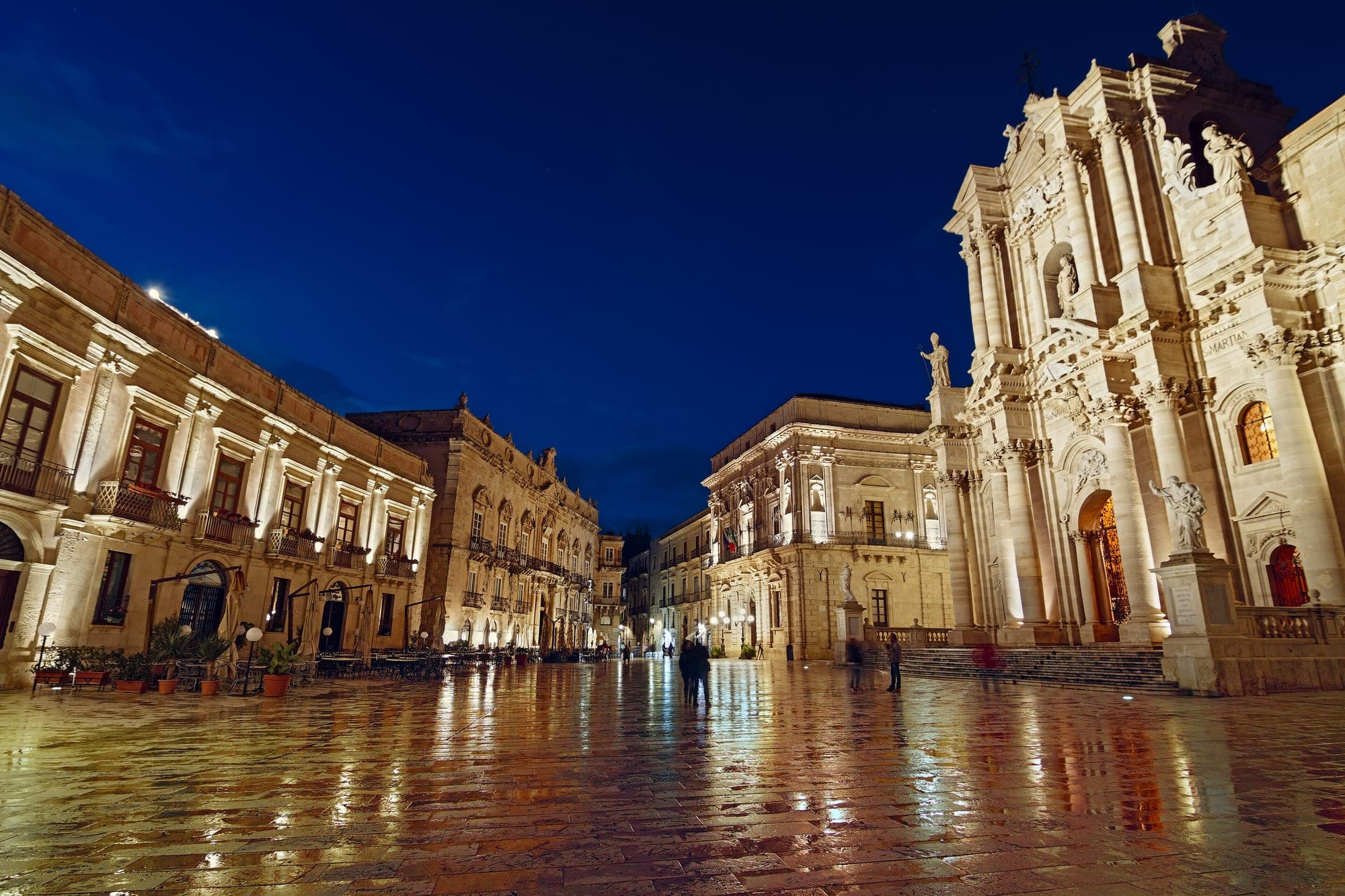
Photo © Dario Giannobile, CC BY-SA 4.0
Curated picks coming soon.
21 placesNearest first
See them all on the map4min walk
See
Basilica Santuario di Santa Lucia al Sepolcro
Four minutes from your door, and since 6 December 2020 this is where Caravaggio’s “Burial of Saint Lucy” hangs: a huge, almost empty canvas in a bare church, best early in the morning — older guides still send you to Santa Lucia alla Badia and they are wrong, so just check the current opening hours.
13min walk
See
Basilica Santuario Madonna delle Lacrime
The concrete cone you can see from half of Siracusa: inside, the light falls from the apex onto the little Madonna that wept in 1953, and the sheer hush of the space is worth the detour even if you never set foot in churches.
14min walk
See
Museo Archeologico Regionale Paolo Orsi
One of the richest archaeological museums in Europe, set in the gardens of Villa Landolina: you go in for the Venus Anadyomene and come out two hours later thinking about pots from Megara and Pantalica — indoors and cool, so it is the card to play on the hottest afternoon (check the current hours).
16min walk
See
Catacombe di San Giovanni
Beneath a roofless basilica run kilometres of galleries cut into the rock, loculi lined up along the walls and the temperature always the same: you go down with a guide, so turn up and ask for the next slot — it is the visit that rescues a scirocco afternoon.
17min walk
See
Latomia dei Cappuccini
A quarry tens of metres deep turned into a garden, rock pillars left standing and citrus trees at the bottom: this is where the Athenian prisoners of 413 BC ended their days — morning light is the good light, and it is worth checking it is open before you walk up.
22min walk
See
Anfiteatro Romano
Inside the Neapolis park, half quarried out of the rock and half built up: you look down into it from the rim, spot the central channel that carried the water — and the rest — away, and remember that the Romans came after the Greeks here.
23min walk
See
Piazza Duomo
Approximate location
The finest square in baroque Sicily, an oval of white stone hemmed by façades and free of a single car: blinding at midday, the city’s drawing room after dark — walk through twice, at noon and after dinner, and it is two different places.
24min walk
See
Ara di Ierone II
Only the base survives, but it runs almost two hundred metres: the largest altar of the Greek world, where hundreds of oxen were sacrificed in a single day — in low late-afternoon light the scale suddenly lands.
15min drive
See
Castello Eurialo
Dionysius’ fortress at the tip of the Epipolae plateau, the greatest Greek military work we know of: ditches cut into the rock, tunnels you can walk through, and from the ramparts the whole plain down to the sea — go late in the afternoon.
30min drive
See
Avola — Piazza Umberto I
Rebuilt in 1693 on a hexagonal plan, with this square at the exact centre of the hexagon: you come for the Avola almond and an ice cream, and half an hour does it — a good stop on the way to or from Noto.
35min drive
See
Noto — Cattedrale di San Nicolò
The town rebuilt after the 1693 earthquake entirely in the same golden stone: climb the cathedral steps, walk Corso Vittorio Emanuele end to end, and come back at sunset when the stone turns orange.
50min drive
See
Palazzolo Acreide
Up in the hills, the baroque hinterland without the crowds: churches in darker stone, a tiny and perfectly intact Greek theatre above the town, and cool air that in August is reason enough to drive up.
90min drive
See
Modica
Two towns in one, upper and lower, stitched together by a staircase of some two hundred and fifty steps up to the duomo of San Giorgio. Down below, Corso Umberto and the chocolate shops; up top, the view over every house clinging to the gorge.
90min drive
See
Ragusa Ibla
The old town clinging to its spur of rock, all steps and alleys: park up top and walk down to the San Giorgio staircase, which opens suddenly at the end of the climb. Half a day, taken slowly.
100min drive
See
Scicli
The smallest and least visited of the three, and for many the loveliest: a single street, Mormino Penna, with five churches and the palaces shoulder to shoulder, and hardly anyone about. Montalbano watchers will recognise the town hall.
See
Castello Maniace
The far tip of Ortigia: Frederick II’s Swabian fortress, bare halls and salt wind on three sides.
See
Duomo di Siracusa
A Greek temple to Athena turned cathedral — the Doric columns are still there, swallowed by the baroque wall.
See
Fonte Aretusa
A freshwater spring a step from the sea, wild papyrus growing in it and the ducks doing the rest.
See
Orecchio di Dionisio
A twenty-three metre quarry cave with impossible acoustics — a whisper at the mouth carries to the very end.
See
Teatro Greco
Carved straight into the Temenite hillside — Greek tragedy is still performed here in May and June.
See
Tempio di Apollo
The oldest Doric temple in Sicily, right where Ortigia begins — a couple of columns, half a millennium BC.